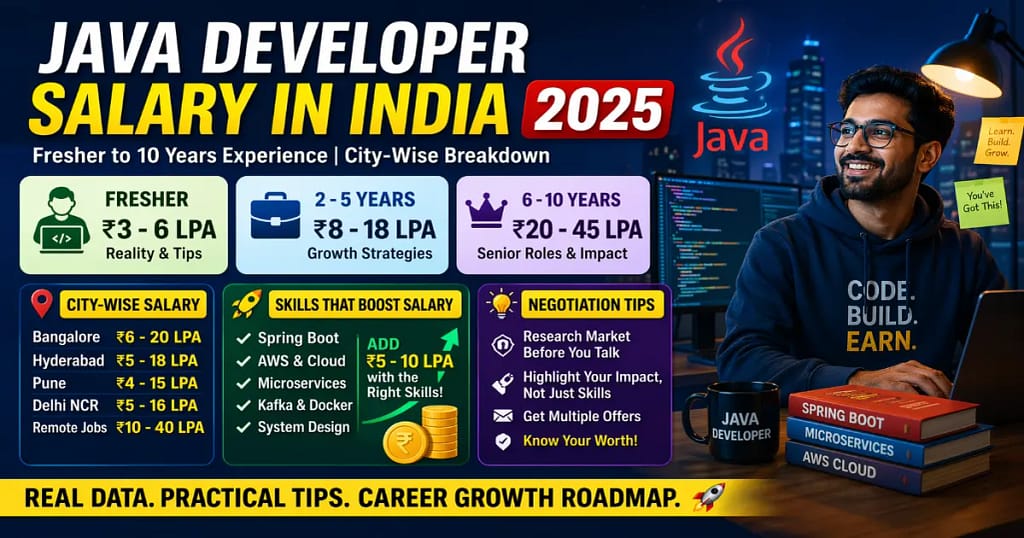
I built 4 projects… but still got ₹3 LPA. That’s the reality many Java freshers face in 2026.
Meanwhile, someone with the same skills is earning ₹10+ LPA.
So what’s the difference?
This guide breaks down the real Java developer salary India 2026, based on market trends from platforms like Naukri, Glassdoor, and LinkedIn—plus practical insights from real developers.
Java Developer Salary India 2026
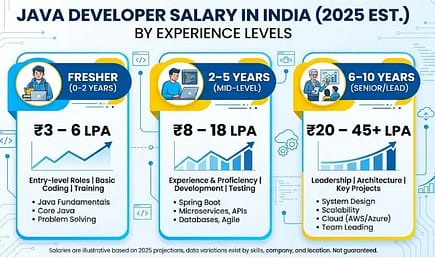
| Experience Level | Salary Range (India) |
|---|---|
| Fresher (0–1 yr) | ₹3 – ₹6 LPA |
| 2–5 Years | ₹8 – ₹18 LPA |
| 6–10 Years | ₹20 – ₹45 LPA |
These numbers vary based on skills, city, company, and negotiation.
Fresher Java Developer Salary (0–1 Year)
Reality vs Expectations
Most freshers expect ₹6–10 LPA (after learning Spring Boot and projects)
Reality: ₹3–6 LPA is the common range
Why the gap?
Because companies don’t just pay for knowledge—they pay for job-ready skills.
Factors Affecting Fresher Salary
1. Skills (BIGGEST Factor)
- Only Core Java → ₹3–4 LPA
- Java + Spring Boot + APIs → ₹5–6 LPA
- Java + Backend + Cloud → ₹6–8 LPA
2. Projects
- CRUD apps → low impact
- Real-world apps (auth, payments, deployment) → high salary
3. College Tier
- Tier 1 → better opportunities
- Tier 3 → skills matter more than degree
4. Internship Experience
- Even 2–3 months internship can boost salary by ₹1–2 LPA
Real Example (Fresher Journey)
“I was getting ₹3.2 LPA offers. After learning Spring Boot + deploying on AWS, I cracked ₹7.5 LPA in 3 months.”
Skill upgrade = salary jump.
If you’re confused about what to learn first, follow this complete Java roadmap for freshers 2026.
Java Developer Salary (2–5 Years Experience)
Salary Range: ₹8 – ₹18 LPA
This is where your income grows FAST.
1. Backend Expertise
- REST APIs
- Microservices architecture
- Database optimization
2. Tech Stack Expansion
- Spring Boot → Mandatory
- Hibernate → Expected
- Docker + Kubernetes → High value
3. Switching Companies
- Staying → 10–20% hike
- Switching → 30–80% hike
Example Career Growth
| Year | Salary |
|---|---|
| 1st Job | ₹4 LPA |
| After 2 Years | ₹9 LPA |
| Switch Company | ₹14 LPA |
Switching strategically is the biggest salary booster.
Senior Java Developer Salary (6–10 Years)
Salary Range: ₹20 – ₹45 LPA
Top developers cross ₹50 LPA in product companies.
Roles & Responsibilities
At this level, you’re not just coding—you’re:
- Designing scalable systems
- Leading teams
- Making architecture decisions
- Handling production issues
High-Paying Roles
- Senior Backend Engineer
- Java Architect
- Tech Lead
- Engineering Manager
Salary Breakdown by Role
| Role | Salary |
|---|---|
| Senior Developer | ₹20–30 LPA |
| Tech Lead | ₹25–40 LPA |
| Architect | ₹35–45+ LPA |
City-Wise Java Developer Salary in India 2026
Bangalore (Highest Paying)
- ₹6–20 LPA (mid-level)
- Strong demand for backend + cloud
Best for product companies & startups
Hyderabad
- ₹5–18 LPA
- Great for freshers + mid-level roles
Pune
- ₹4–15 LPA
- More service-based companies
Delhi NCR
- ₹5–16 LPA
- Growing startup ecosystem
Remote Jobs (Game Changer)
- ₹10–40 LPA (even higher for global roles)
- Paid in USD sometimes
Remote + skills = maximum earning potential
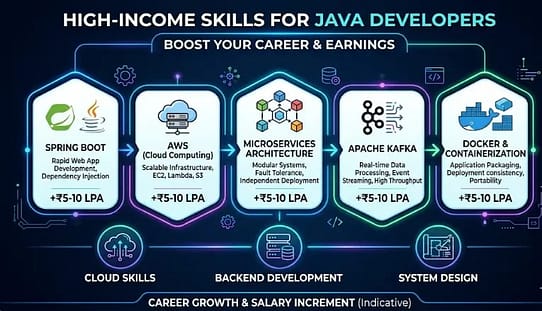
High-Income Skills That Add ₹5–10 LPA
Want to increase your salary fast?
Learn these:
Core Skills
- Spring Boot (mandatory)
- Microservices architecture
- REST APIs
Cloud & DevOps
- AWS / Azure
- Docker
- Kubernetes
Advanced Skills
- Apache Kafka
- System Design
- Performance optimization
To increase your salary, start with a structured Spring Boot roadmap for freshers.
Salary Impact Example
| Skill Added | Salary Increase |
|---|---|
| Spring Boot | +₹2–4 LPA |
| AWS | +₹3–5 LPA |
| Microservices | +₹5–10 LPA |
Salary Negotiation Tips (Real Strategies)
What Works
- Always have 2–3 offers
- Say: “Based on market, I expect ₹X–₹Y range”
- Highlight impact, not just skills
Mistakes to Avoid
- Accepting first offer
- Saying “I’m fine with any salary”
- Not researching market rates
Know your worth before negotiating.
Many candidates struggle due to common issues explained in why Java freshers fail interviews.
Upskilling Roadmap (2026) Step-by-Step Path
Step 1: Core Java
- OOP, collections, multithreading
Step 2: Backend Development
- Spring Boot
- REST APIs
Step 3: Database
- MySQL / PostgreSQL
Step 4: Advanced Skills
- Microservices
- Kafka
- Redis
Step 5: Deployment
- AWS
- Docker
Best Learning Platforms
- Udemy (budget-friendly)
- Coursera (certifications)
- YouTube (free + practical)
- Official docs (must-read)
Key Takeaways
- ₹3–6 LPA is normal for freshers
- Skills matter more than degree
- Switching jobs = biggest salary jump
- Cloud + microservices = high income
- Remote jobs can double your salary
What Should You Do Next? (Step-by-Step Action Plan)
If you’re confused after reading salary numbers, this is your clear path:
If You’re a Fresher (0–1 Year)
- Learn Core Java + Spring Boot
- Build at least 2 real-world backend projects
- Deploy your project (AWS or free hosting)
- Start applying after you can explain your project confidently
If You Have 2–5 Years Experience
- Focus on Microservices & System Design basics
- Learn Docker + Cloud (AWS/Azure)
- Prepare for company switch (very important)
- Target product-based companies
If You Have 5+ Years Experience
- Master System Design + Architecture
- Improve team handling & decision-making skills
- Learn scalability, performance optimization
- Aim for Tech Lead / Senior roles
My Real Experience with Java Developer Salaries
When I started, I genuinely thought knowing Java + a few projects would easily get me ₹6 LPA. Reality hit fast—my first offer was ₹3.2 LPA. It felt frustrating, especially after seeing others post higher offers on LinkedIn.
The turning point came when I stopped just “learning” and started building like it’s a real job. I deployed a project, handled errors, and actually understood how APIs behave in production. That changed interviews completely.
I also learned one hard truth: staying in the same company too long slows your salary growth. My biggest jump didn’t come from working harder—it came from switching smarter.
One mistake I made early was undervaluing myself in negotiations. Once I started researching salaries and confidently quoting a range, offers improved.
If you’re stuck at a low package, don’t panic—it’s usually a skills or positioning problem, not your potential.
FAQs (Frequently Asked Questions)
1. What is the average Java developer salary in India in 2026?
The average salary of a Java developer in India varies based on experience, skills, and company type. According to platforms like Glassdoor and Naukri, freshers typically earn between ₹3–6 LPA, while mid-level developers can earn ₹8–18 LPA. Senior professionals with 6–10 years of experience may earn ₹20–45 LPA or more, especially in product-based companies. These figures are based on aggregated salary data reported by employees and may vary across regions and industries.
Source: Glassdoor
Source: Naukri
2. Which city offers the highest salary for Java developers in India?
Bangalore is generally considered the highest-paying city for Java developers in India due to the presence of major tech companies and startups. Salary data from Glassdoor and AmbitionBox shows that compensation in Bangalore is often higher than in cities like Pune, Hyderabad, and Delhi NCR. However, the cost of living is also significantly higher in Bangalore, which can affect overall savings. Salary differences also depend on company type, role, and individual skill level.
Source: AmbitionBox
Source: Glassdoor
3. What skills can increase a Java developer’s salary in India?
Skills such as Spring Boot, microservices architecture, and cloud platforms like AWS are commonly associated with higher salaries. According to LinkedIn Jobs and industry reports, employers often look for developers who can build scalable backend systems and work with modern DevOps tools. Knowledge of Docker, Kubernetes, and messaging systems like Apache Kafka can also improve earning potential. However, salary impact depends on how effectively these skills are applied in real-world projects.
Source: LinkedIn Jobs
Source: AWS Training
4. Is Java still a good career option in 2026?
Java continues to be widely used in enterprise applications, backend systems, and Android development. According to the TIOBE Index and Oracle, Java remains among the top programming languages globally due to its stability and large ecosystem. Many large organizations still rely on Java-based systems, which creates consistent demand for skilled developers. However, developers are also expected to learn modern frameworks and tools alongside core Java.
Source: TIOBE Index
Source: Oracle
5. How reliable are salary figures from websites like Glassdoor and Naukri?
Salary data on platforms like Glassdoor, Naukri, and AmbitionBox is based on self-reported information from employees. While these platforms provide useful estimates and trends, the figures may not always represent exact salaries for every company or role. Variations can occur due to differences in company size, negotiation, location, and skill level. Therefore, these sources should be used as reference points rather than exact benchmarks.
Source: Glassdoor
Source: Naukri
Reality Check (Read This Carefully)
Most Java developers stay underpaid not because they lack hard work… but because they lack direction.
Many people:
- Keep watching tutorials for months
- Don’t build real projects
- Avoid switching companies
The market rewards execution, not effort alone.
If you fix direction, your salary growth becomes predictable.
You can explore more ideas from these Java developer portfolio projects that get you hired.
Conclusion
Java development is still one of the most stable and rewarding careers in 2025—but only if you approach it the right way.
The salary gap you see in the market is not random. It comes down to skills, exposure, and decisions. Two developers with the same experience can have a ₹10–20 LPA difference simply because one focused on real-world skills and switched at the right time.
If you take one action after reading this article, make it this:
Stop consuming endlessly and start building + applying strategically.
Your salary will follow your direction.
Share this:

Discover more from GroWithMoney
Subscribe to get the latest posts sent to your email.