
I still remember the week Java virtual threads were announced.
My timeline was full of excitement.
Blog posts. Conference clips. Twitter threads.
Everyone sounded sure about one thing.
“Java is simple again.”
“Blocking code is back.”
“Thread pools are dead.”
As a fresher learning Java, it felt like I had finally arrived at the right time.
Then one sentence ruined the mood.
“Virtual Threads didn’t really work for Netflix.”
And suddenly the excitement turned into confusion.
Did Java mess up again?
Did I bet on the wrong thing?
That’s where this story really starts.
Where I Was Coming From

I’m not a Netflix engineer.
I’m not handling millions of requests per second.
I’m a CS/IT fresher from a non-fancy background, learning Java seriously and trying to understand backend systems without drowning in buzzwords.
Most of my days look like this:
Reading documentation.
Building small APIs.
Trying to understand why threads block.
Wondering if my code is “good enough.”
So when Virtual Threads was announced, it felt personal.
Finally, something that promised less complexity, not more.
The Noise Around Virtual Threads
When Project Loom became real, the internet exploded.
“Goodbye, thread pools.”
“Millions of requests with simple code.”
“Reactive is dead.”
People were writing code snippets like:
And saying, “That’s all you need now.”
For someone who had already struggled with async callbacks and reactive confusion, this sounded like relief.
Simple code.
Readable flow.
Less mental load.
Java was speaking my language again.
Then Came the Netflix Story
Somewhere between excitement and learning, a strange headline appeared.
“Virtual Threads broke Netflix.”
That line spread fast.
No nuance.
No context.
Just fear.
If Java couldn’t handle Netflix, what chance did my simple Spring Boot app have?
That fear wasn’t logical.
But it was very real.
Let’s Slow Down for a Second
Before judging anything, we need to understand one thing clearly.
Netflix is not a normal Java backend.
Not even close.
Netflix runs Java at a scale most of us will never touch in our careers.
Millions of requests per second.
Thousands of services.
Extreme performance constraints.
Their systems are not built the way we build projects in college or early jobs.
This difference matters more than any feature.
What Virtual Threads Actually Are (Simple Version)
Before virtual threads, Java used platform threads.
One request meant one OS thread.
Threads were heavy.
Too many threads caused memory and scheduling issues.
So the industry learned to survive:
Thread pools.
Async code.
Reactive frameworks.
Complex logic to avoid blocking.
It worked, but it wasn’t friendly.
Virtual Threads changed the model.
They are lightweight.
Managed by the JVM.
Cheap to create.
Blocking doesn’t hurt as much.
This meant something powerful:
We could write simple, blocking code again—without killing performance.
For most applications, this is a huge deal.
So Why Didn’t Netflix Celebrate?
Because Netflix had already solved a different problem.
Their backend is designed around:
Non-blocking I/O.
Event loops.
Custom schedulers.
Years of async optimization.
They weren’t suffering from thread pool pain.
Virtual threads shine when you want to block safely.
Netflix had spent years avoiding blocking entirely.
So when they tested Virtual Threads:
Gains were small.
Some assumptions broke.
Some performance paths became worse.
Not because virtual threads failed.
Because the architecture didn’t need them.
The Quiet Villain: ThreadLocal
This part rarely gets attention, but it matters.
Large systems rely heavily on ThreadLocal data.
Security context.
Request metadata.
Tracing.
Metrics.
With platform threads, this was stable.
Threads lived longer.
Context stayed attached.
Virtual threads behave differently.
They are short-lived.
Mounted and unmounted frequently.
Suddenly, ThreadLocal became expensive and tricky.
Netflix found that:
Context propagation was harder.
Debugging became messier.
Old assumptions stopped working.
Again, not a Java problem.
A design mismatch.
The Myth That Hurt the Most
Some people believed this quietly:
“Virtual threads mean unlimited concurrency.”
Netflix engineers were very clear about this.
Even with Virtual Threads:
Databases still have limits.
Networks still choke.
Downstream services still fail.
If you allow millions of requests without control, you don’t get scalability.
You get chaos.
Netflix already had strong back-pressure systems.
Virtual threads didn’t remove the need for discipline.
The Emotional Shift I Felt
When I understood this, something changed.
The fear faded.
The disappointment softened.
I realized something uncomfortable.
I wasn’t scared because Virtual Threads “failed.”
I was scared because I expected one feature to solve everything.
That’s not how engineering works.
The Silent Struggle We Don’t Talk About
Here’s the part no blog tells you.
As a fresher, you constantly compare yourself to extremes.
Netflix architecture.
Google-scale systems.
Twitter-level traffic.
You read about them and think:
“If I don’t understand this now, I’ll be behind.”
That pressure is silent but heavy.
It makes simple learning feel insufficient.
It makes good progress feel small.
It makes you chase complexity before earning it.
Virtual Threads didn’t confuse me.
The comparison culture did.
What Netflix Actually Taught Us
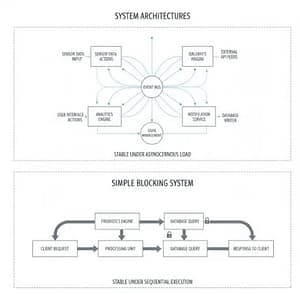
This story isn’t about failure.
It’s about clarity.
Virtual threads are not magic.
They simplify concurrency, not remove limits.
Architecture matters more than features.
Context matters more than headlines.
And most importantly:
Simple code is not junior code.
For most teams, readable blocking code with virtual threads is a massive win.
Netflix didn’t reject Virtual Threads.
They just didn’t need them.
Should You Use Virtual Threads?
Let’s be honest.
If you are building:
Spring Boot APIs.
JDBC-based systems.
REST services.
Typical backend applications.
Virtual threads will likely make your life easier.
If you are already fighting thread pool tuning, this is relief.
If you are building:
Fully non-blocking systems.
Event-driven architectures.
Custom schedulers.
Maybe virtual threads won’t help much.
And that’s not a failure.
That’s engineering.
How I’m Looking at Java Now
I stopped chasing hype.
I focus on understanding basics better.
Threads.
Blocking.
Back pressure.
Trade-offs.
Resources like official Java docs and talks from real engineers helped more than viral threads ever did.
Not because they were exciting.
Because they were honest.
A Gentle Ending
Java Virtual Threads didn’t break Netflix.
Netflix simply reminded us of something important.
There is no single “best” model.
There is only the right model for your system, your scale, and your problems.
As a fresher, you don’t need Netflix-level complexity.
You need clarity.
You need readable code.
You need patience.
Virtual threads are a powerful tool.
Just don’t turn them into a belief system.
Because even the best technology can’t save us from unrealistic expectations.
And honestly, that lesson is worth more than any new feature.
Reading official Java docs helped more than Twitter threads ever did.
If you’re a fresher learning Java and feeling overwhelmed by scale stories, you’re not behind.
You’re just early in the journey.
And that’s exactly where you’re supposed to be.
RoadMap for Google Software Engineer
Discover more from GroWithMoney
Subscribe to get the latest posts sent to your email.