I thought I was doing everything right.
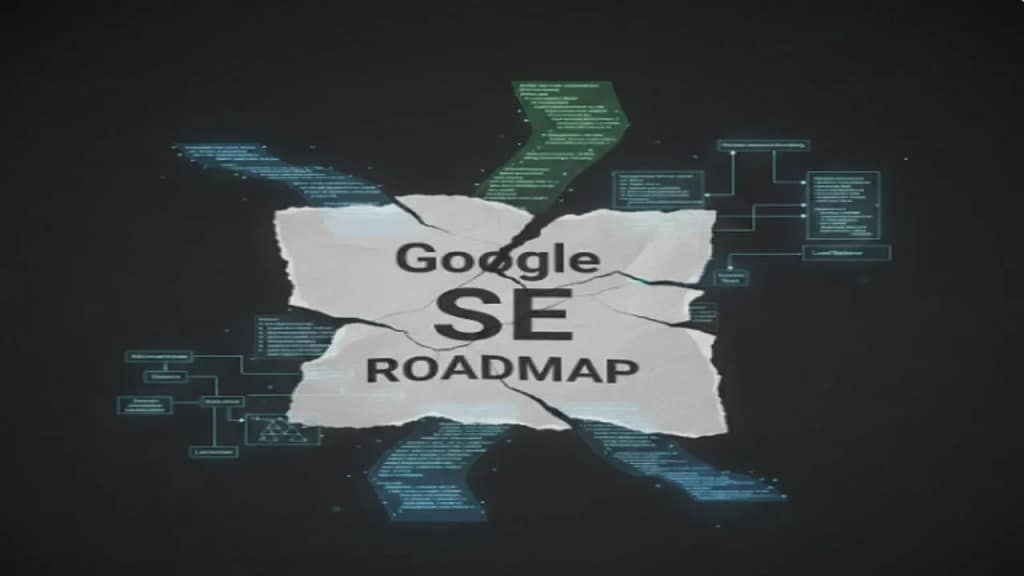
Google roadmap.
Top YouTube channels.
Daily coding goals.
Still, I failed.
Not once.
Not quietly.
But in a way that made me question my entire journey.
Where I’m Coming From
I’m a Bachelor of Engineering student.
Tier-3 college.
2025 batch.
Like many of us, I didn’t have fancy exposure.
No alumni pipeline.
No campus shortcuts.
So when I searched “Roadmap to become a software engineer at Google,” it felt like a solution.
A clean path.
Clear steps.
Hope.
Mistake 1: I Thought a Roadmap Was a Promise
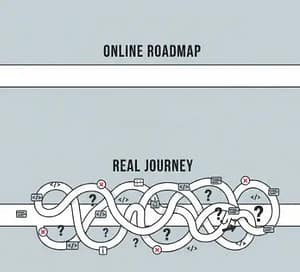
What I thought
If I follow a Google Software Engineer roadmap step by step,
Eventually I’ll reach there.
Everyone online said the same things:
DSA
System Design
Projects
Consistency
It looked logical.
What went wrong
A roadmap is not a contract.
It doesn’t guarantee outcomes.
It doesn’t adjust to you.
I followed it blindly, not wisely.
Real-life proof
I cleared some coding questions on LeetCode.
Felt confident.
Then I failed the Infosys SP and DSE coding test.
Same concepts.
Different pressure.
Different reality.
What I learned
Roadmaps show what to learn.
They don’t teach how deeply you understand it.
And Google doesn’t hire checklist-completers.
They hire problem solvers.
There was a quiet disappointment after that test.
I didn’t talk about it much.
But it stayed.
Mistake 2: I Believed YouTube Alone Was Enough
What I thought
“If I just learn from YouTube, I can crack Google.”
Free content.
Smart creators.
Perfect explanations.
Why pay or struggle more?
What went wrong
Watching felt productive.
But it wasn’t practice.
I knew about concepts.
I didn’t own them.
Real-life proof
I could explain the React lifecycle in words.
But building a clean component under time pressure?
Blank mind.
Same with Spring Security.
JWT sounded easy in videos.
Implementing it correctly without copying? Not so easy.
What I learned
YouTube is a guide, not training.
Understanding happens when:
You write code without pausing
You debug your own mistakes
You fail alone, without comments helping you
That’s where real learning starts.
At this point, I was tired.
But I kept adding more videos to my “Watch Later.”
Mistake 3: I Did Too Many Things at the Same Time
What I thought
More skills = better chances.
So I did:
DSA in the morning
React in the afternoon
Spring Security at night
Random system design videos on weekends
Being busy felt good.
What went wrong
Nothing went deep.
Everything stayed surface-level.
Real-life proof
In interviews or tests:
DSA felt shaky
Projects felt half-baked
Explanations felt confused
I couldn’t connect things.
What I learned
I realised I was doing multiple things at a time.
But to achieve something, I had to fully focus on one thing.
Google engineers don’t know everything.
They know a few things very well.
Depth beats noise.
That realization hurt.
Because it meant accepting wasted effort.
Mistake 4: I Treated DSA Like a Game, Not a Skill
What I thought
Solve X number of LeetCode problems.
Green ticks = progress.
Simple.
What went wrong
I memorized patterns.
Not reasoning.
The moment a question looked different,
Panic started.
Real-life proof
During the Infosys coding test:
I recognised the problem type
But couldn’t structure the solution properly
Time slipped away
I knew something, but not enough.
What I learned
DSA is not about quantity.
It’s about:
Why this approach works
Why another fails
How constraints change decisions
Google-level questions test thinking, not memory.
That day, LeetCode stopped feeling like a game.
Mistake 5: I Built Projects for GitHub, Not for Understanding
What I thought
A good GitHub profile = a strong resume.
So I pushed projects.
Clean README.
Deployed links.
What went wrong
Some parts were copied.
Some logic wasn’t mine.
It looked impressive.
But felt empty.
Real-life proof
When asked:
“Why did you choose this architecture?”
“Why this auth flow?”
I hesitated.
What I learned
Projects are not decoration.
If you can’t:
Explain design choices
Modify features confidently
Handle edge cases
Then the project owns you.
Not the other way around.
After that, GitHub felt less like a showcase.
and more like a mirror.
Mistake 6: I Underestimated Interview Fear
What I thought
“If I know concepts, interviews will be fine.”
What went wrong
Fear is real.
Hands shake.
The mind freezes.
Simple logic disappears.
Real-life proof
Even when I knew the approach,
I doubted myself.
That doubt cost time.
And time costs answers.
What I learned
Interviews test more than skill.
They test:
Calm thinking
Structured explanation
Confidence under pressure
These come only from mock interviews
and honest self-evaluation.
The Silent Struggle No One Talks About
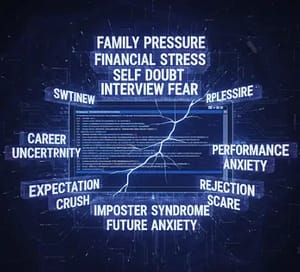
This part hurt the most.
Self-doubt.
Family pressure.
Financial pressure.
Friends getting placed.
LinkedIn success posts.
That constant feeling of being late.
Burnout without achievement.
Fear of interviews.
Fear of trying again.
Some nights, I questioned my degree.
Some mornings, I avoided coding.
This wasn’t laziness.
It was emotional exhaustion.
And no roadmap talks about this.
What I Changed (Slowly, Honestly)
I didn’t quit.
I simplified.
One main goal at a time
One tech stack in focus
Fewer resources, deeper effort
LeetCode for reasoning, not counting.
YouTube only when stuck.
ChatGPT to clarify doubts, not replace thinking.
GitHub for projects I fully understand.
Still learning.
Still failing sometimes.
But now, failures teach me something real.
Soft Takeaways for You (No Motivation Talk)
A Google roadmap is guidance, not destiny
Depth matters more than speed
One solid skill beats five shallow ones
Fear is normal—avoidance is costly
Understanding beats copying, always
You don’t need to be perfect.
You need to be honest with yourself.
A Quiet Ending
I haven’t reached Google.
Not yet.
But I stopped chasing it blindly.
Now I’m building myself properly.
If you’re behind, confused, or tired —
You’re not broken.
You’re just learning the hard way.
And sometimes,
That’s the only way that actually works.
Discover more from GroWithMoney
Subscribe to get the latest posts sent to your email.
Pingback: Software Developer vs Software Engineer: Roles, Salary & Career Path