
(What My Days Actually Look Like)
Some mornings, I wake up feeling like I’ve figured things out.
By evening, I’m not so sure.
No one talks about this part of preparation—the quiet days between college ending and a job beginning. No timetable. No certainty. Just time, pressure, and your own thoughts.
This is what my daily routine looks like as a fresher preparing for IT jobs.
Not the version people post online.
The real one.
Morning: Waking Up Without a Reason to Rush
I usually wake up around 8 or 8:30.
There’s no alarm screaming urgency. No office to report to. And honestly, that’s the strangest part.
During college, mornings had structure.
Now, mornings start with one thought:
“Okay… What am I doing today?”
Before getting up, I check my phone. That habit hasn’t gone anywhere.
Placement groups. LinkedIn notifications. One classmate sharing an offer letter. Someone else is posting about their first day at work.
I don’t feel jealous immediately.
First comes a small pause.
Then a quiet comparison.
I put the phone down and get up anyway.
Breakfast Time: Half Food, Half Overthinking
Breakfast is simple. Sometimes late.
While eating, YouTube is always on—not for entertainment, but for reassurance.
Videos like
“How I cracked my first IT job”
“What freshers should focus on in 2025”
“Mistakes I made during placement prep”
I don’t follow their exact paths. Most of them don’t even apply to my situation. But watching them gives me something important for the next hour or two.
A feeling that I’m not completely lost.
Late Morning: Trying to Study Seriously
Around 10:30 or 11, I open my laptop properly.
This is when the actual preparation is supposed to happen.
I usually start with something familiar:
Revising Java basics
Practicing a few DSA problems
Reading DBMS or OS notes I already have
Starting new topics feels heavy. Familiar topics feel safe.
Some days go well. I understand things quickly.
Some days, the same concept feels confusing for no clear reason.
I’ve learned that my focus changes daily—and fighting it only wastes more time.
Afternoon: The Confusing Phase
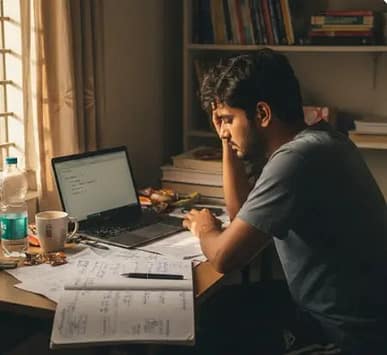
By afternoon, the doubts begin.
Should I focus more on:
DSA or development?
One language or multiple?
Projects or internships?
Off-campus or referrals?
Everyone has an opinion. Seniors, YouTubers, and Telegram groups—all saying different things.
I open one group, read messages for five minutes, and close it again.
Too much information makes me feel slower, not smarter.
Sometimes I do nothing productive for a while.
Just sit there, scrolling, thinking.
Lunch: The Uncomfortable Question
Lunch is when reality quietly checks in.
Someone at home asks casually:
“Any interviews yet?”
I answer:
“No, still preparing.”
No one says anything else.
But the silence stays longer than the question.
I eat, help a little around the house, and tell myself I’ll start again by 3.
Sometimes I do.
Sometimes I don’t.
Late Afternoon: Low Energy, Low Expectations
This is the hardest part of the day.
Energy is low. Motivation is gone.
So I lower my expectations.
Instead of “learning something big,” I do small things:
Re-read notes
Watch an interview experience
Fix an old coding mistake
It doesn’t feel impressive.
But it keeps me connected to preparation.
On bad days, that’s enough.
Early Evening: Applying for Jobs Without Hope
Around 4:30 or 5, I open job portals.
I filter for:
Fresher
Entry-level
0–1 years
And still see:
“2+ years experience required”
I apply anyway.
Upload resume.
Fill in the same details again.
Click submit.
I don’t expect replies.
That’s the part no one tells you—you apply knowing most applications will disappear silently.
No rejection mail.
No confirmation.
Just nothing.
Evening: Comparison Comes Back
By evening, social media becomes dangerous.
Someone posts:
“Finally placed”
“Joining next month”
“Grateful for this opportunity”
I scroll, pause, and scroll again.
I feel happy for them. Truly.
But I also feel smaller for a few minutes.
Questions start again:
Am I late?
Am I doing something wrong?
Did I choose the wrong path?
I close the app.
Not because I’m strong—but because I know staying there longer will ruin the night.
Night: One Small Win Saves the Day
Somewhere around 7 or 8, something small happens.
I solved a problem I couldn’t earlier.
Or finally understand a concept that confused me for days.
Or complete a tiny part of a project.
It’s not something I’d post online.
But it’s enough to tell myself:
“Okay. Today wasn’t wasted.”
These small wins matter more than big plans.
Late Night: Light Learning or Just Rest
After dinner, preparation becomes lighter.
I might:
Watch a tech video
Read a blog
Go through interview questions
Or I might do nothing related to IT at all.
I’ve learned that forcing productivity at night only creates burnout.
Some days, rest is more useful than revision.
Before Sleep: The Thoughts No One Sees
When the lights are off, preparation doesn’t stop.
It just moves into my head.
Thoughts like
“What if this takes longer than expected?”
“What if I never get selected?”
“What if everyone moves ahead and I don’t?”
No roadmap prepares you for this part.
But almost every fresher goes through it—quietly, alone.
What This Routine Really Is
This routine isn’t perfect.
There’s no strict schedule.
No dramatic transformation.
No constant confidence.
It’s uneven. Some days are productive, some days are slow.
Some days hopeful, some days heavy.
But it’s real.
And for most Indian freshers preparing for IT jobs, this is closer to the truth than any ideal routine.
If Your Days Look Like This Too

You’re not lazy.
You’re not wasting time.
You’re not failing.
You’re just in the middle—between student life and professional life.
It’s an uncomfortable place.
But it’s also a common one.
And slowly, without announcements or celebrations, things start to move.
One application responds.
One interview happens.
One routine changes.
Until then, these ordinary days are doing more than you think.
FAQ (Frequently Asked Questions)
Q1. Is this routine enough to get an IT job?
This routine reflects reality, not guarantees. Results depend on consistency over time.
Q2. Should freshers follow a strict timetable?
Most freshers don’t. Flexible routines work better for mental balance.
Q3. Is DSA mandatory for all IT jobs?
No. It depends on the role and company.
Disclaimer
This article is based on personal experience and observations as a student. Hiring processes may vary across companies.
If you’re a fresher living similar days, you’re not alone.
You can explore more honest career stories on this blog.
Why freshers fail tech interview
Student writing experiences
Read Someelse experience
Discover more from GroWithMoney
Subscribe to get the latest posts sent to your email.